Showing posts with label Anglican. Show all posts

17 April 2018

Discovering a feminine Godde

“And the Lord said…” preached the priest at the parish I was attending, and suddenly, everything changed.

“Why does it have to be “the lord”?” I thought. “We know God is above and beyond gender, but I only ever hear God referred to using male pronouns and male terms. Can God be Mother as well as Father? Can God be … Lady?” That thought was the beginning of the seismic shift in my theology, my practice, and my life.

Until that moment, I had lived my faith in a conventional (but hopefully courageous) way. I studied English Literature and Religious Studies in my BA, and then went on to complete a Bachelor of Ministries degree from the-then Bible College of New Zealand, with a focus on spiritual formation. During my time at BCNZ, I returned to my Anglican roots, and was Confirmed as an Anglican not long after I married my husband in 2001.  

I joined the Third Order Franciscans not long after we married, and I transferred my vows to a Benedictine community a few years later, as I found the Benedictine vows of stability, conversion of life, and obedience to God a much easier fit for a married woman than poverty, chastity and obedience! Our daughter, then aged 4, assisted me at my vows by vesting me in the Benedictine habit – she has grown up with a mother who works fulltime, is married and a nun, and is quite happy with all of that, as is my husband who is my strongest supporter!

Fast-forward five years. My small family were attending a small Anglican church and living our lives as a youngish couple with a small child. Everything was seemingly normal. I was reading voraciously, as is my lifelong habit, and one of the books I read around that time was Sue Monk Kidd’s The Dance of the Dissident Daughter. And then, from left field, comes this thought: why do I never hear God addressed by female names? And following on from that, what is wrong with being female, that (according to Augustine and other male early church leaders) means women cannot be seen as imago Dei, fully created in the image of God as women?

St Augustine said that,

“Woman does not possess the image of God in herself but only when taken together with the male who is her head, so that the whole substance is one image. But when she is assigned the role as helpmate, a function that pertains to her alone, then she is not the image of God. But as far as the man is concerned, he is by himself alone the image of God just as fully and completely as when he and the woman are joined together into one.”

I dived into the most serious theological and historical study I had ever done (including the six years I spent doing my degrees) – certainly the most fraught. This felt like a life-or-death situation – the life or death of my ability to respect myself as a woman, the life or death of my ability to connect with the divine.
Is there historical and theological support for calling God by female names?

To my great delight (and relief), there is ample biblical, theological and historical evidence for addressing the Most Holy by female names. I discovered that the translations made of the Bible had frequently changed female names for people, as well as mistranslating female terms and names for the divine. For example, the ancient Hebrew “El Shaddai” is usually translated “The Almighty”, assuming that the term derives from shadad, burly or powerful, or shadah, “mountains”. However, many Hebrew scholars now understand that El Shaddai derives from Shad meaning breast – El Shaddai therefore translates as the Many-Breasted One. The ancient habit of translating the Tetragrammaton, the four-letter name for God, as “LORD”, further reinforced the incorrect assumption that only male language was acceptable to name the Most High.

The usage of “Father/abba” to relate to the Holiest is only used 4 times in Mark, 15 in Luke, 49 in Matthew, and 109 times in John (the Gospels were written in that order, from around 60-120AD) - surely a sign of a growing community usage, rather than Jesus’ actual words. Given the Gospels had earlier sources now lost to us, it is possible that the term “father” was used infrequently by Jesus, and was then latched onto by his followers as a quiet and subconscious way of reinforcing the Graeco-Roman worldview of men as pater familias, the head of the household, and its use encouraged and strengthened through the years by those reinforcing male leadership and power.

I came to understand that, if we only use male names for God, then that subtly implies that only men are made in God’s image. When we use only male terminology for God and for people in our liturgy, worship, preaching and teaching, we subtly reinforce this incorrect, outdated understanding of God and imply that maleness is “normal” and somehow being female means we are less.

Theologically, we understand that God is omnipotent, omnipresent, and omniscient, and as omnipotent and all-powerful, God will not be limited by gender, and nor should our language for God put God’s power and presence in a box of limited male terms. St Hildegard of Bingen (1098-1179) called God Mother in her sermons; so too did Julian of Norwich (c1342-1416). Yet despite extensive biblical, historical and theological evidence, including discussions within our own Anglican tradition in New Zealand and overseas over the last 50 years or more, we still continue to primarily name God by male names.

I began to look closely at the liturgy and Bible translations we use. I translated the entire Benedictine daily prayer cycle into gender neutral and expansive terms (where female and male names are used equally) for my own use as a Lenten devotion in 2014. I then tackled A New Zealand Prayer Book/He Karakia Mihinare o Aotearoa. I wrote a version of the Eucharistic liturgy p.404 that removed all male terms for God, replacing them with female or gender-neutral terms. Not being a priest, I was not able to use this, but it was an exercise in trying to find out what it might feel like to be in a liturgy where God was addressed openly as Sophia, Mother, Lady, She. I began to look for versions of the Bible where the names for God were not changed, and discovered both The Inclusive Bible, and even more powerful, The Divine Feminine Version of the New Testament, and began to experience the scriptures with a new voice.
I found that I could not keep silent about the explosion of love that I had felt since I had openly embraced calling God by female names – my favourites being She Who Is, following Elizabeth Johnson’s book of the same name that was the beginning of the strong theological backbone I needed, Sophia (the Greek translation of Hokhmah or Wisdom), and Mother or Lady. I began to think about Jesus as the incarnation of Holy Sophia in the continuation of the Wisdom tradition, which a lot of scholars had identified, and reflected that the Holy Child could be thought of as the Child of the Mother. I began to discuss my discovery of She Who Is with others.

And that’s where things got complicated.

There was a lot of support, often from older Christian friends that had gone through the second wave of feminism in the 1960s and 1970s, several of whom had been closely involved with the Anglican Church and the Prayer Book Commission. There was also stonewalling, accusations of heresy, and refusal to engage with the theology and history, particularly from some male priests who clung to patriarchy like a ragged, worn-out old blanket that they wouldn’t, or couldn’t, let go of.

I tried everything. I spoke, with love, to friends and acquaintances at churches – my own and others. I spoke with my husband and daughter, who have both journeyed with me on this discovery of She Who Is Godde (the term I now prefer for the divine – it is an old medieval spelling for the divine, and is completely neutral with no male connotations such as “God” has). I spoke with passion to our churchwardens and parish priests, describing my journey and trying to engage with them over the theological and historical information I had gleaned through at least five years of intensive study, prayer and reflection.

I felt unwelcome in regular church liturgy because I only ever heard Godde named by male names, and that no longer named my experience of her. I changed the words when I was singing hymns (first resigning from the church choir) and participating in liturgy, substituting she for he so I could be present in church. When I used a female name for Godde, Sophia, Holy Wisdom, when leading intercessions one Sunday in 2016, I was formally censured by my parish priest and removed from all rosters in the parish where I, and my dangerous ideas about Godde, might be expressed publicly. Patriarchy was rampant.

I did find allies – people that felt the same as me, who had sought Sophia/Wisdom and found her, as we are enjoined to do in Proverbs and Wisdom. They helped me keep up my courage. In the end, in desperation, I sought a meeting with our People’s Warden asking what I could do, as our parish priest completely refused to engage in conversation about this topic with us. The Warden recommended we put motions to our parish AGM – which we did, seeking removal of male terms when the whole of humanity was meant, and seeking education for the parish and changes in our language for Godde in church.

So how did it all turn out? Well, the parish priest would not allow the motions on the naming of Godde to even be put at the AGM (giving us no warning of this so we couldn’t even amend the motions) and refusing to allow discussion on the naming of Godde. I wasn’t even allowed to speak to the motion I was trying to put (which had been notified to the parish according to the correct protocol, three weeks before the AGM). The priest tried to undermine the motion on naming of people by putting a much weaker motion from the chair, but at least there is some intention to remove terms such as “mankind” and “man/men” when they are intended to refer to all people. The motion on educating the parish on the female names for Godde was passed, after my husband spoke with calm eloquence, identifying that his experience of the journey was that knowing Godde by male-only terms was missing so much of the richness of Godde’s nature.

And where does that leave me? I am still reading, still researching – trying to identify what it might do to the way the church treats people, the way Christians treat people, if we viewed Godde as our Mother. How might we respect her world, if we thought about it as birthed by her? How might we show love one to another, if all of our people could see and hear of Godde in terms that show that, no matter what flesh you are born into, you are fully born and bearing Godde’s image? I am still lighting candles of hope in her name, praying in the stillness of the night sky, walking the beach and hearing the water crash on the shore, filling her footprints left there by some other person who walked before me and carries her name.

I am calling out her name in the world, and naming patriarchy and misuse of male power wherever I see it.

I cannot un-see or un-know what I now know, the experiences of her love I have had. My image of Godde is forever changed – much bigger, wider, deeper, more beautiful, richer. I am a different person since I encountered Godde the Mother, Godde the Creatrix, Godde the Incarnate Child, Godde Holy Wisdom. I have found my image was in her all along – I just couldn’t see it, because the language we use for God told me that only men were made in God’s image. Women were only mothers, not fathers – but now Godde is my Mother I can find myself in her.

16 February 2018

Skating the dark moon

I am watching the Olympic men's figure skating, one of my favourite things to see. I only get to see figure skating every 4 years, when the Winter Olympics is on. There is something so beautiful about seeing these highly-trained women and men soaring over the ice, effortlessly, forever blurring the line between ballet and skating and flight.

I guess it's that feeling of seeing someone master something, truly master it, until it looks easy. Like the speed skaters, looking so relaxed as they fly around their course faster than a car goes. It's also incredibly beautiful to watch.

I am looking for that sense of ease, of doing something until it is utterly natural and becomes normal. I am beginning to feel this sense of ease about calling the Divine by Her names. It came hard to start with because I didn't know any different, but now feels utterly normal - and I get frustrated when all of the language commonly used for the Divine is male. It's like we're only getting half the story: Godde is so much more than a male, and by cutting out female language we cut out female experience too.

Tonight is the dark moon following the January supermoon, so tonight is a night of deepness, darkness, and depth, perhaps as deep and dark as it can go. Tonight, I will see whether the depth and darkness of the night leads me somewhere with Her. Maybe I can burn with Her dark light, at ease on the ice.

15 February 2018

From dust to stardust

From dust you are, and to dust you shall return. Ash Wednesday liturgy
We have calcium in our bones
Iron in our veins
Carbon in our souls
And nitrogen in our brains.
93 percent stardust
With souls made of flames
We are all just stars
With people names. Nikita Gill

These two quotes have been circling around my head over the last couple of days. From dust to dust - 93% stardust. From dust to stardust. Stardust we are, and to stardust we shall return.

This Lent, I want to try to spend time reflecting on the journey I've come on over the last few years. It is an unashamedly feminist journey, so if you want to come too, feel free, but know what you're in for. The more I think about it, the more I believe that I am stardust with a human name, called by Godde to journey with Her, to bear witness to Merlin Stone's famous quote, "In the beginning, God was a woman," and to know the truth, that I am created imago Dei, in Godde's image as a woman in my female flesh and skin and spirit - contrary to so-called "saint" Augustine, who said,
Woman does not possess the image of God in herself but only when taken together with the male who is her head, so that the whole substance is one image. But when she is assigned the role as helpmate, a function that pertains to her alone, then she is not the image of God. But as far as the man is concerned, he is by himself alone the image of God just as fully and completely as when he and the woman are joined together into one.
Augustine, you were wrong and your misogyny has made our journey as women immeasurably harder. Until this vileness is repudiated, women's stories will continue to be lost and men continue to exercise power over women. Women will still be raped, shot, put down, ignored, passed over, and dominated, while this kind of thinking is still accepted.

I have finally come to know that from stardust I came, and to stardust I will return, made in the image of She Who Is, Godde, Wisdom, Sophia, Goddess, Great High One, Hine-nui-e-te-Po, Trinity of Mother, Child and Spirit, creatrix of all that is and is to come, originator and Prime Cause of the big bang. Maybe the big bang was her giving birth to the universe? Interesting idea.

As I said in my last post, I will not be complicit in my own subjugation. This Lent, I intend to reflect on my place in the world and where Godde touches it - and the world - and what I can do to change what I see all around me.

2 January 2017

Hagia Sophia, holy Sophia, wholly God

This year promises to be an interesting one. As part of seeing the new year in, the whanau and I reflected on what our dreams were for 2017, and what the best thing was from 2016. 

For me, the dreams for this year could create an interesting time. The work dream is to find my joy in my work again as I experiment with new ways of working, particularly with contracting. 


The more interesting dream comes out of some events recently. I frequently lead the weekly intercessions at our parish, and early in Advent it was my turn again. These are the prayers I led our parish in on 11 December:


Blessed One, this day we celebrate the joy you bring us.
You came to us in an ordinary event
Of a refugee mother giving birth
In the only shelter that could be contrived.
In the joy of the face of the exhausted mother,
The joy in the face of her husband,
We see a very ordinary miracle.
We pray for ordinary miracles:
Life, peace, hope, joy, love.
Holy Wisdom, Holy Sophia,
Bring your ordinary miracles into the faces
And lives of those in pain, in places of war,
Or affected by your restless earth.
Holy Wisdom, holy Spirit, hear our prayer.

Coming One, in this Advent we remember the baby who came,
Jesus, Light of the World,
The baby born of a refugee teenager.
And we know you promise to come again
In joy and love and peace and hope.
We pray for teenage mothers, refugees,
And those for whom this season means fear and violence.
May they know your peace and hope.
­­We pray for those for whom Christmas is a reminder of loss,
And for those who have gone on that have left a hole in our hearts.
Holy Wisdom, holy Spirit, hear our prayer.

Holy Sophia, Wisdom Spirit of God,
We pray for leaders everywhere
That they would hear your voice,
Listen to your heart, and act with justice and compassion.
May they follow your star,
See your love and kindness,
And return by another way, changed.
Holy Wisdom, holy Spirit, hear our prayer.

Most Holy, may we look with your eyes,
Hear with your ears.
Help us to experience your coming
In the touch of those we love, the smells and tastes
That make this season special.
May our senses show us your ordinary miracles.
May we have the courage and kindness
To share those ordinary miracles
With those that we find it a challenge to love.
Holy Wisdom, holy Spirit, hear our prayer. Amen.

Quite simple and innocuous, I thought. Apparently I was wrong. I got a snarky email a few days later from the vicar telling me that I shouldn't have named God by her ancient name of Sophia in church, and that I wasn't to lead intercessions again until after he had "talked to me" in January, as it "wasn't appropriate" to name God by a female name in church and "someone had complained". 


I saw red. I still see red, as this is the third time he's tried to do this - he told me I couldn't edit the church magazine after I wrote an article about Sophia, and that I wasn't allowed to even submit any articles on that subject, and now he tries to remove me from the intercessions. Patriarchial oppression and censorship at its clearest and most obvious. 


I will not allow someone else's narrowminded, patriarchal, androcentric ignorance allow the knowledge of Sophia's beauty to be crushed again. The vicar seems to be of the opinion that the only person that this affects is me - well, he'd be wrong there. I asked a whole lot of people I know that this matters for to speak to him, and the next day in church (I wasn't there - I was both too angry to go, and wanting to visit a friend of mine in hospital) lovely hubby spoke during the "sharing" time at the end and identified how much discovering Sophia had meant to both him and me - and why I wasn't there, because the vicar was trying to shut me down. 


Lovely hubby also helped me make my Christmas present: he got a t-shirt printed for me that says "Hagia Sophia | Holy Sophia | Wholly God" on the front, and "Wisdom-Sophia is vindicated by all her children" on the back. I wore it to church yesterday, and intend to wear it to church every week.

So my dream for 2017 is that we see full equality in the language we use for God in church. And I am going to fight for it. I have been fairly quiet, asking nicely for this to be included especially as we combined the 9 and 10.30am services recently and changed all the liturgy, but as nothing has happened its time to get significantly less vocal - and significantly more Anglican. After all, the Fourth Mark of Mission says that we are called to "Transform unjust structures of society, to challenge violence of every kind and pursue peace and reconciliation." Patriarchy is an unjust structure of society and it's time that our language for God reflects our commitment to a just society where women and men are equal in Sophia's sight and made in her image. 

29 November 2015

And we're here...

The world is full of light: the lights of the valley below, the twinkly lights on the banister of our balcony that we put up for Advent. Stars. Sunsets. Huge moons that look like great gold pieces. Our new home seems to be illuminated in all sorts of ways, especially with the wonderful afternoon and evening light we get here.

Coming home from work is like coming on a retreat: the total privacy of this house wraps itself around me the moment I walk in the door. And yet, it's on quite a busy road (the main road in and out of our hillside suburb) and it's only 5 minutes to the centre of Lower Hutt and 25 minutes to Wellington (without traffic!). Our living room overlooks the valley and Wellington Harbour, and the view is spectacular. No two days are the same - not even two minutes - and it's always lovely. Even when the storms roll in, we can see the clouds coming in over the water, and we get wrapped in clouds up here. No window is overlooked by any other house: the only windows that look onto the street are the dining room, and they are shielded by native trees. Our bedroom looks out onto the deck, and it's shielded by trees from the street so it's totally private. This house is an introvert's paradise!

Returning to our parish church of St James has been like going home again: returning to liturgy, to good music, to good friends who welcome us back into the family. In some ways its as though we never left but in others, we've learnt new things we can offer St James, and the parish has created new traditions that we're becoming part of. One of them was a lovely surprise last week, on the solemnity of Christ the King, last day of the church's year. It was a solemn high mass, concelebrated by three priests, with millions of candles (more or less!), and incense! Lots and lots of incense! The music was the normal St James sung liturgy, although the priest leading it sang the entire prayer of consecration which we don't usually do. It was fabulous. The only slight drawback from my point of view was that I had laryngitis and literally couldn't make a noise at all - the humour of the hymn choice struck me when we sang "Let all mortal flesh keep silence" - I didn't have a choice! It was a relief to sing "rejoice" today on Advent Sunday!

St James has also always had a strong tradition of getting children involved in the liturgical life of the parish. We hadn't been back three minutes when I was asked to rejoin the choir (which I did with joy), and our daughter was asked to be a Herald. The Herald is a tradition peculiar to St James, where a child carries a taiaha behind the crucifer in all the processionals, and is responsible for reading the opening sentence of the liturgy, and leading the processional of the offertory up to the altar. They wear child-sized liturgical robes. It's a sort of junior server: the next step is serving the altar, and then being crucifer or liturgist. Our daughter very proudly did her first service as Herald a couple of weeks ago, and was very pleased that she got to be Herald on the First Sunday of Advent. Hubby has picked up his camera for the parish again, and has been mixing the sound and running the powerpoint (a new innovation for St James since we left). I've also been writing for the parish magazine again, which was pretty cool.

We've also found outlets for most of our other activities: we've found an archery club in Trentham - the only drawback is that they don't have an indoor range so if the weather's nasty, there's no shooting. However, they do have a clout and field range, which we didn't have in Rotorua. Daughter has Linked from Brownies to Girl Guides here, and has had a wonderful term with Guides here (sewing box came out again for yet more badges!). Hubby has returned to the camera club here, and is rediscovering pottery which he used to do years ago. I'm loving having my friends and professional networks back, and the challenge of what I'm doing at work is really interesting.

So, all in all, the move has worked well. It's good to be back!

16 September 2015

Camino di Compostella

The calendar tells me it's 16 September, over a month since I last posted. I can believe it. I thought today would be a day of craziness, but in the end the auction scheduled for today was cancelled because our house sold prior (thank God) and we have an offer on another house in Lower Hutt. The slight downside is that we don't get possession of said house until early November, but it is worth waiting for. It is exactly in the area we wanted to be, it has a stunning view over the harbour that will keep me plastered up against the living room window all the time I'm home, and it's been recently redecorated with a brand new kitchen. In fact, it's as close to perfect as a house can be, and we bless God for blessing us with it. 

The house feels like a gift, but what is more important to us is how much we have been missed, and welcomed home. We went down to the Hutt to look for houses a couple of weekends ago, and we were very nearly mobbed by the congregation at our parish church of St James: everyone was really happy to see us and was ecstatic that we're moving home. It was almost overwhelming, especially when I found out that they have begun a journey into looking at the gendered language of God in liturgy and hymns, which has been a real issue for me for some time. We realised how much they had missed us, just as we have missed them terribly for the time we've been in Rotorua. We had lived into each others' journeys in the nearly 10 years we'd been worshipping at St James', and now it's time to resume the camino again.

So, at the Rotorua end of this move, I am making lists about my lists, crossing things off, adding lots more, and feeling as though my brain has too many tabs open! One major thing will be crossed off this Friday when I finish work as a consultant: I get a couple of weeks' break to move (originally also intended for moving in!) before I start my new job in October. However, things are slowly slipping into place: our new house is 700m from the local primary school so our daughter can walk to school (until we move into the house, hubby will commute her to school from where we're staying), we've found her a Guide company and an art class, hubby is looking forward to rejoining the local camera club and art society, and I'm happy that my professional networks and choir are now back on the horizon. Not to mention access again to art galleries, museums, the ballet, orchestras, and music! Lunchtime organ recitals, here I come....

However, there will be things we will miss: we're not looking forward to saying goodbye to friends, and we will miss the beautiful weather and the loveliness of this part of the island. Not to mention how close it is to everything: an hour to Tauranga/the Mount, 4 hours to the snow, 3.5 hours to Auckland, and I never did get back to Coromandel while I was here. 

But, as before, we know we have been called. In fact, it's all part of the bigger camino, the journey, and the impetus for this one really began about this time last year when we did the Tarore pilgrimage, and then our pilgrimage in the UK really showed us our hearts. So it's time. Time to go home. 

10 March 2015

Table-flipping

I saw something amusing on Facebook the other day from the Episcopal Church:


Tonight I feel very much like that answer. I want to flip over some tables and chase a few people with whips over the gendered language issues in our liturgy, hymns, and readings. I substitute things out but it still drives me crazy that I cannot walk into a church and hear God addressed as she as often as God is addressed as he, when that language is historically and biblically attested to. 

Hence the Sophia liturgies. And some table-flipping of my own, I hope. 

18 February 2015

From dust to dust

"Remember that you are dust, and to dust you shall return," said the priest as he marked my face with the ashes of last year's palm crosses, mixed with holy oil. So, Lent begins again, the cycling back towards the Journey to Jerusalem with Jesus.

Last year, I undertook to reflect throughout my Lent on this blog. It was an interesting discipline and it made me stop each night to look back on the day, the good and the bad things. I didn't quite manage every single day but was fairly close. This year's Lenten discipline is slightly different. Lent is about opening myself to God's goodness in new and different ways, looking for the light of Sophia's hand opening in my life.

So this year, I have a Lenten task: to write a Divine Office for Sophia, using the Sophia translation of the psalms that Mother Laura Grimes sent to me. I made a start tonight after the Ash Wednesday service (which was lovely - held at St Faith's Ohinemutu, combined with the Catholics and Methodists, and beautifully bilingual!), and have finished a Monday morning prayer office. I'm going to give it a test run tomorrow morning to see how it goes.The format of the Divine Office is clearly set throughout history - all I'm doing is tinkering with the translations.

I'll also be undertaking some physical as well as spiritual exercise each day.

The other part of a Benedictine Lent is to read a study book right through. I had already started Sophia: the hidden Christ of Thomas Merton by Christopher Pramuk, but had come to a grinding halt with it a couple of months ago: it's very interesting but quite dense! I am going to read this as my Lent book, and if I finish it before the end of Lent there is another study book waiting in the wings that I haven't started yet, but has been eyeing me up from the bookshelf in my library.

I'm interested to see how this threefold discipline: writing and praying liturgy, reading, and exercise, will help me open myself more to God's darkness and love.

15 February 2015

Sophia prayer

One of my distinct frustrations at present is the invisibility and lack of resources for liturgical exploration of Sophia. Part of my vocation as a Benedictine is to pray the Opus Dei, the work of God - usually known as the Divine Office or breviary. Those of you who follow the blog (I have followers?!) will know that I've been trying to find resources for Sophia-prayer for some time. The most recent foray into an expansive language Office was from the Order of St Helena, which I used for a while. However, somehow it didn't seem to truly fit, although it gave me some very good ideas.

The next step, which was suggested by one of my Brothers in the Community, was to create my own version of the Office. Purists among you will now be shouting that the Office is the "official prayer of the church" and therefore shouldn't be tinkered with. However, praying the Office as I currently have it is an exercise in trying not to grind my teeth to the gumline, through frustration and anger over the misogynist language used for God - which hardly helps me connect with the One who truly Is! The pattern of each service of the Office is set historically so putting together a Sophia version shouldn't be that tricky (just time consuming!) and I am going to use the lectionary for the readings, so I don't fixate on the readings I like and ignore the bits that are harder for me.

The first step was to find a four-week psalter pattern, which sounds significantly easier than it was. The complication comes when you consider that Roman Catholics, Protestants, and Orthodox all number the psalms slightly differently - RCs and Protestants both have 150 psalms but they're "chopped up" differently; the Orthodox add another one and have 151. I needed to find a Protestant arrangement as my translations were all numbered that way! I also wanted to make sure it included all of the psalms, including the so-called "imprecatory psalms", because I think it's more honest to human experience. I think I cracked that one, finally.

Step two: which translation of the psalms? Should I re-image a known translation into Sophia-language, use the OSH psalms, use the NZ Prayer Book psalms with changed language, use the psalms from the Inclusive Bible.... ?

This was a source of extreme teeth-grinding, until about a week ago I googled "sophia psalms" in sheer desperation. And I think I found a treasure! I stumbled across the blog of Mother Laura Grimes, an Old Catholic Bishop and feminist, who has taken the 1979 Book of Common Prayer version of the psalms and made them Sophia-centric. And they are beautiful. And bless her, she's made them available to others! I have always loved the way the BCP psalms flow, as they were written for singing, and she's captured that.

The neat thing is that Mother Laura has also created a Sophia little office and rosary! I've ordered those too and am excited to explore her work. Here's hoping....

1 February 2015

Homesick for pilgrimage

I've often wondered whether it was possible to be truly homesick for a place that isn't really home. Last night, I got my answer: absolutely.

Part of our trip to the UK was a pilgrimage. We visited three cathedrals and several holy sites while we were over there. We started our pilgrimage on Christmas Day in NZ's northernmost Cathedral, Holy Trinity Auckland, which was pretty special as it was 200 years to the day since the preaching of the first Christian sermon in this land. We continued it with English cathedrals and holy places.

York Minister is jaw-droppingly beautiful. The feral GPS took us right into the centre of the old city within the walls - to the point that we nearly ran into the pedestrian-only zone through the Shambles (oops); but as a way to see the Cathedral, driving up Museum Street to the York Information Centre pretty much can't be beaten. The Minster just loomed up out of the frost, with the morning light behind it, shimmering on the golden stone, and the Heart of Yorkshire tracery in the Great Window catching the sun. Inside, it's even better. I literally had to scrape my jaw off the floor when we walked into the nave and looked up. I have never seen anything so lovely as those pillars of stone reaching for the sky, and the gilded bosses and ribbed ceiling. We did one of the guided tours, which was very interesting but quite long. I loved the crypt, with the tomb of St William of York (very simple, a single block of stone with a candle burning on it), and the ancient paintings. We went back later on that day for evensong in the quire. Candles, choir (a visiting choir - the Minster's one was on holiday but they were very good), and that thunderously gorgeous organ. Worship was a whole body experience: the feel of the organ, the smell of wax and candles, the music, the silence. Prayers offered for the prayer intentions left in the Minster. Very down to earth and grounded in reality, even in the midst of the glorious music.

Sheffield Cathedral on New Year's Day: very quiet and peaceful. Reminded me a lot of the feel of Wellington Cathedral of St Paul although it's much much older and looks nothing like Wellington's "big pink sarcophagus"! It's not one of the "famous" ones but it was very lovely. We liked the fact you could see the Norman, Gothic, and later additions very clearly, and it had a gorgeous chapel to the Holy Spirit that I particularly liked. It also had the coolest of all the nativities we saw: made of Sheffield steel, about 1.5m high, and somehow the makers had made that steel very winsome and gentle.

Grace Dieu Priory was not on our original itinerary: my sister-in-law suggested it as it was just up the road from their place near Loughborough. We got there by a very cold walk through English woods in the snow, which was interesting in itself: I was quite surprised by the lack of undergrowth, bushes etc - just trees, and they seemed fairly widely spaced. I don't think it was deliberately planted but it had a "managed" feel. The priory itself is a ruin, but it was beautiful. The stonework was all iced with thick snow, and the walls rose out of snowy fields. The late afternoon light was very kind to the stonework, and the whole place had a kind of breathless hush, almost as though it was waiting for something. It had the feel of a "thin place": it knew it had once been holy ground, and the sense of consecration was still there. It was very cold! Having the deep snow helped the sense of hush too. The pond beneath the priory was frozen solid (small daughter threw a good-sized rock just to make sure and it skidded for several metres!).

Most people wouldn't consider Stonehenge a holy place, but I do. Most modern scholarship seems to think that it, and the landscape around it, was holy to the prehistoric peoples, and that Stonehenge was a place of worship. I certainly sensed that when I was there: It is so old, so unbelievably old, and it was in use for over 1000 years for whatever the ancients did there. It has left a mark on both the physical landscape and the landscape of Spirit. I spent some time trying to listen to the place (rather difficult when it's swarming with tourists!). I got the sense that Stonehenge isn't quite sure what it is anymore, but that when it's quiet, after dark or at the turnings of the year, it would go back in time a long long way. It would be a place of awe, and to me, that's what worship is: finding the awe, the marks of our recognition of the numinous, in places, times, music, art, and people - the places where God has touched us and we have touched God.

I suspect the National Gallery isn't on a list of holy places for many people either, but there were so many wonderful works of art, many of them altarpieces or great artist's explorations of religious themes that it was definitely part of our pilgrimage. So many artists, so many places to go in the world through the art, so many themes of love and beauty, power and betrayal, peace and war and everything in between. Highlights too numerous to mention, but seeing Leonardo da Vinci and Raphael in the same building was pretty amazing, not to mention Holbein, Constable, Turner, Degas, and a whole lot more.

Westminster Abbey was a different kind of holy: the holiness of the ordinary, the holiness that we find through living our lives and contributing to society. It also turned into a very personal moment, when I found a shrine to one of my ancestors, and the tomb of another (a Dean of Westminster). Did not expect that at all! Partly because of the number of people there, it was hard to get a sense of the Abbey as a working church, except at the prayers on the hour (when one of the Canons requested everyone to be still for a few moments while they offered prayer). We didn't go to the prayers at St Edward the Confessor's tomb, although I did spend a few moments reflecting there. I found it hard to get a sense of the architecture too, because there were so many monuments and grave markers - I found some old friends, like CV Stanford, Howells, Dryden, Keats, Shakespeare, and rather endearingly, CS Lewis (no Tolkien though). Also Queens Elizabeth and Mary (in a shared grave, rather beautifully). Henry V, and Henry IV.

The jewel in the crown, and the finale of our pilgrimage, was Canterbury Cathedral itself. We were staying in the beautiful, peaceful Cathedral Lodge within the precincts of the Cathedral - it was tasteful, comfortable, and luxuriously beautiful in a very understated way. What was amazing was how the noise of the city just disappeared when you went through the walls into the precinct. The old city walls are stone and incredibly thick: the grounds are almost silent. The Cathedral opened on us like a revelation as we came through the gates from Quenensgate. After a very late lunch we went in. The sense of prayer and Presence hits you the moment you walk through the doors - there is a holy hush in the building not of any person's making. It just is. We were blessed enough to arrive about 15mins after Saturday evensong had begun (we got there about 3.30pm), so there was a tide of glorious music and resonant organ everywhere. We went to explore the crypt, beginning with praying at the Martyrdom of St Thomas Becket, and then visiting the various chapels in the crypt - all with evensong washing over us, even through the thick stone of the ancient Norman crypt. There are some very ancient wall paintings in one of the chapels that gave us a tiny sense of the riot of colour the Cathedral would have once been, but it was the atmosphere of the place that kept stilling us. The place where St Thomas' body lay, in the Chapel of St Mary of the Undercroft; the place where his tomb was before they built the shrine (that Henry VIII pulled down). The single candle that burns where the shrine once was. And of course the tomb of Edward the Black Prince. Over 1500 years of continuous prayer has marked this place. The very stones pray and praise.

The next day we went to choral eucharist there, in the quire, with the light blue and gold and red through the stained glass. Incense. Singing. Organ. Psalms sung to chant like I've never heard them before. Processions of readers, the Gospels, holy gifts. Receiving communion at the High Altar of Canterbury Cathedral. The taste of port on my lips, the holy body and blood. More singing, and hearing the purity of those boys' voices soaring in the Anthem.... Prayers, very down to earth, for ordinary blessings, ordinary pains, ordinary joys. Being encouraged to pray the Lord's Prayer in our own language - I started in Maori but got lost amongst all the English! Blessing the water for the holy water font. Finishing with Psalm 150 for the Recessional, soaking the stones in praise and prayer yet again.

And at the end of the service, gathering with Canon Nick in the Chapel of Our Lady of the Undercroft for our pilgrim blessing, giving thanks for the journey we had made and the one we were to make home. Holding Canterbury specially in my heart, trying not to cry as we left. None of us wanted to leave. Trying to carry Canterbury with me, St Thomas, the Martyrdom, the crypt, and the praise soaked into the stones.

Can I be homesick for a place I don't belong to? Yes, I can. I'm homesick for Canterbury. I am homesick for the Presence of that place, for the stillness, the silence, the beauty of the worship, the smell of incense, the thunder of the organ and boys' voices soaring in praise. Beautiful stone and light and glass. The warmth and kindness of the welcome we received from everyone. The place of martyrdom, destination of millions of pilgrims like us through the centuries. The place marked by God's presence and our recognition of God's presence.

Now I need to find those places here, find a way to bring it home to smalltown New Zealand, land of sheep, green fields and bright sunshine. It's going to be a long job.

15 December 2014

Still here...

The calendar reads 15 December and it was Gaudete Sunday yesterday - somehow my brain looks at those two things and thinks, "Does not compute!" I'm not quite sure how it's got to the last working week of the year already. This year grew wings and just took off!

In my last post, I was thinking about little boxes in the spice drawer. Well, now there are little boxes everywhere. My pantry is the tidiest and cleanest it's been for 6 months, and all the kitchen cupboards have all been cleaned and tidied. I've been working steadily around all those little nooks and crannies that seem to create dirt, even if dirt never gets near them!

I've also been doing lots of practice with The Thing, my lovely compound bow (okay, that's my name for it), and my groupings have been getting quite close. The next piece of kit that's on the radar is a proper release aid - I've got a wrist release and want to move to a hand-held one. I tried one out the other day and it was gorgeous: the only problem was that it was for three fingers only and my pinky felt like it was waving uselessly around. I prefer the four-finger ones because all of my hand feels engaged and there's less pull through the wrist. Now to find one I like! Unfortunately the one I found that I liked doesn't come in a four-finger model....

Small daughter has had a good time recently, with another gold medal in her final trampolining competition of the year, and a wonderful report from school. Hubby has nearly finished trolling through the piles of final marking for his students, and I am trying to get my desk cleared before the office closes on Friday. The directors decided that they would give us the three days before Christmas as paid days off that aren't leave, which is rather nice. Good timing too - can finish off those last-minute preparations before Christmas!

10 August 2014

Romuald and Wordsworth

St Romuald's Brief Rule says, "Sit in your cell as in paradise. Put the whole world behind you and forget it.... Empty yourself completely and sit waiting, content with the grace of God, like the chick who tastes nothing and eats nothing but what their mother brings them." In that being is peace. The world may come with us into our cell, our place of prayer, but when it comes with us it comes into the paradise of God's grace, and wonderful things are possible there.

The world is too much with us, and sometimes at the moment it feels very much too much with us. Wars and rumours of wars, fear, hatred, death, loss, pain, grief. What can I do in the midst of so much suffering? My little efforts feel like less than the widow's mite. But I need to remind myself of what I am, of who God has asked me to be: to dwell in my inner place as if it were paradise and wait there. Even though it feels quite often as though no-one else has turned up - to wait there is a gift and it is paradise. My inner cell is the doorstep to heaven and I should be content to sit and wait there, whether there is sunshine or rain, and know that the world I have put behind me is part of me and is waiting on the doorstep with me, gathered to paradise in my heart.

But no-one said it would be easy. As one of the monks at St John's Abbey preached, in our monastic round of rediscoveries and re-echoes and revisiting the same truths day after day, "we have good days, and bad days, and sometimes just days". And quite often its raining on the doorstep, or it's cold, and frequently it is lonely and dark and dispiriting, and sunshine and light and love seem like a distant dream. A long obedience in the same direction, as Eugene Peterson called one of his books, requires sitting on the doorstep even in the winter when the snow is piled so high we cannot see over it and springtime seems a million years away.

But then there are the days when the daffodils are dancing in my garden and the first of the tulips are poking through the ground, the sun is warm on my back as I do a bit of weeding, and the tree down the road is pink with blossom: to sit on the doorstep of my heart on those days is easy and the whole day bubbles with a deep and subtle joy, even when the world is too much with us and seems to be falling around my ears and I don't know what to pray or to say or to do to help. Maybe it's enough. I pray that it is.

5 July 2014

She who is - for me

It doesn't seem like nearly a whole month since I last blogged, but the calendar tells a different tale!

The usual lots going on, but there is one thing that I'm thinking about a lot. In my last post, I talked about some niggles I was experiencing over the naming of God and the location of women's experience in our history and traditions. I have continued to explore those issues. Hubby and I are reading She Who Is: the mystery of God in feminist theological discourse, by the wonderful Sr Elizabeth Johnson. Her book is a comprehensive theological and biblical analysis of images of God, testing the hypothesis that there are images of God that are feminine in our tradition, the biblical text, and classical and contemporary theology, and more importantly, that we need to recover these images because our language defines our experience. Women cannot experience the wholeness of the imago dei, bring made in God's own image, if they cannot find language for God taken from our experience as women.

I was willing to test this hypothesis, and I found, to my surprise and my joy, that the text, history, and theology fully supports images and language for God that is female. Wisdom, the Spirit of God, is consistently spoken of as "she" in the wisdom literature. El Shaddai is an image of God as "the breasted one" (from shad, breast - an alternative extraction can also be from the word for mountain -which looks like a breast!). The Spirit of God hovers over the face of the waters like a mother bird. God gathers us under her wings like a mother bird gathers her chicks. We together raised an objection in that Jesus refers to God as "abba" - "father": but in the analysis of the biblical texts, Jesus calling God father is used '4 times in Mark, 15 in Luke, 49 in Matthew, and 109 in John' (Johnson, p.81) - which when you lay these alongside the dates of the creation of the gospels, shows clearly that this usage is reflecting a growing tradition rather than necessarily the actual language of Jesus himself.

We're only halfway through, but already I find a change in me. Finding and using the images of God as mother, as Sophia, as She who Is, is invigorating my prayer and my understanding of myself as being the bearer of God's image and likeness. A flawed mirror I might be, but at least I can reflect, in my whole person and in my essential femaleness, God's wholeness and essential nature as divine, beyond gender and containing the fullness of femaleness and maleness. I am in God as God as in me. God, the Breasted One, Sophia, the creator of all, the one who breathes fresh life into the world and its people, is the ground of my being, and she is the brightness and love and joy and wisdom of this world.

I have moved, too, from my previous version of the Divine Office (Benedictine Daily Prayer, that I had been using since 2012). I found suddenly that I kept getting tripped up in the language and imagery for God, and it was interrupting my prayer. I discovered that the sisters of the Order of St Helena had retranslated and re-imaged their Breviary to find expansive language for God through a process of over 20 years - not just replacing "father" with God or gender-neutral pronouns, but truly looking for the images of God that have always been there but hidden. And bless them, they made their work available to others. The Monastic Breviary (available now only in pdf) even includes their chant tunes, and shows the years and years they spent with the texts, praying and chanting them, trying to find the right words and feelings and expressions for God's grace that does not use masculine pronouns or images for God. And the result is stunning. I haven't felt so joyous in my prayer of the Office for years. I've used many versions of the Divine Office in the last 15 years, but this is probably the most influential and the most beautiful.

I have also found The Inclusive Bible, another 20-year translation project undertaken by scholars of the highest order, seeking to do justly by the text and images of God, male and female. That only arrived yesterday, but again I find myself approaching the texts with joy again. I read through the first 15 chapters of Genesis last night, and I was stunned. I am extremely familiar with ch.1-3, having spent a large chunk of time in my Judaism studies with that text, and another large chunk when I was at theological college studying the Pentateuch. I've read it in Hebrew and in many different English translations, analysed it, pulled it apart, theologised over it, agonised with it, and lived with it in a scholarly and personal way for long enough to recognise when the scholarship is good. And the scholarship as shown in this translation is superb. It captures the wonderful word-play of the Yahwist author in ch.2-3, and shows the grandeur and beauty of the Priestly author of ch.1. All of this, and it reads aloud beautifully. I also dipped into several of my favourite NT passages to compare the translation, and I love it.

What's more, I read some of it aloud to small daughter tonight, and it was amazing to see her eyes light up like stars. She heard her own experiences reflected in the biblical stories for the first time, and it was a beautiful thing to see.

So, can my image of God expand? Can I reflect more of God if I break the patriarchial idol of masculine language for God? Yes, and yes, and yes again. I can find more of God, more of God's nature, more of God's essential goodness and being-with-us, if I allow myself to trust that female images and language for God are essential to allowing myself to see God's fullness of work in the world, in and through us. I only hope I am up to the challenge. Sophia, She who Is, the ground of my being, the source of life and truth, wholeness, healing and challenge for the whole world, the God who holds the universe and continually breathes it into being. It's going to be an interesting journey!

31 March 2014

Monica Baldwin and the beginning of the journey

I have been re-exploring a favourite (and somewhat obscure) author: Monica Baldwin, niece of Stanley Earl Baldwin, three-times prime minister of England. I first stumbled across Monica in a school book bin when I was about 14, with her fascinating book The Called and the Chosen: the diary of Sister Ursula Auberon, Abbaye de ka Sainte Croix, Framleghen (1957) was being sold off for about 30 cents from the school library. 

The Called and the Chosen was a watershed book for me. I was young, impressionable, and trying to find my way in the world. I was also a member of a deeply Protestant, non-conformist church that still had a strong distrust of all things Catholic. However, I have always had a driving interest in history and simply could not accept the implicit teaching of the church I belonged to that nothing interesting happened between the Acts of the Apostles, the Reformation, and now. 

Monica's book, telling the story of a young woman who entered a convent and then the things that she experienced there, made a deep impression on me. The diarist, Sr Ursula, describes things that I had never experienced at the time, such as the liturgical wonders of Christmas midnight Mass, and the experiences in contemplative prayer. I was entranced. I read and re-read it, feeling for Sr Ursula as she struggled with her vocation and eventual choice to leave the convent because she felt she was called elsewhere and needed to be honest to that call - but with a huge sense of peace because she made the right decision. 

I lost the book for many years after lending it to a friend who didn't return it (why is it that people who would be horrified at the idea of stealing anything else think it's okay to steal books?) and only found another copy with great difficulty some 15 years later. After this, I discovered Monica Baldwin had written two other books: the properly autobiographical I Leap Over the Wall and Goose in the Jungle, where she details her own exodus from the Canonesses Regular of St Augustine after 28 years (1914-1941) and how she adapted (and didn't) to a completely different world and kind of life. In these books she continues to explore what it meant for her to pray, and to find God - the convent was not the right place for her, but she began to explore the ways that the world around her could lead her towards God. 

Thinking about it, Monica Baldwin probably had a lot to do with my own vocation. She helped me see that lots of the things I was longing for actually had a place in church (gorgeous music, silence, prayer, contemplation - none of which fitted in the places where I was at the time) and that what the Celts called the book of nature was more rich and subtle a teacher of faith than anything produced by fallible humans. The Anglican church became the place where I could place all of those parts of my disparate nature and they could all find a home - and unlike Monica, I found that all of them in the end led me to the religious life, firstly with the Franciscans and then the Benedictine Community of Solitude. 

So, even though her own journey into the convent ended with her gathering her courage and leaving, Monica's journey through the convent and into the faith of the everyday has inspired my own. 

30 March 2014

The adam and the adamah

One thought from today. The Gospel reading was the story in John's Gospel (ch.9) when Jesus heals the man born blind. I never noticed it before, but it was pointed out in the sermon today that this was actually an act of re-creation. Jesus made mud and smeared it on the man's eyes. The man born blind either had eyes that were physically damaged, or his brain couldn't interpret the images it received - or quite possibly both. He used the adamah, the humus, the dirt, to heal the adam, the human. Given the deliberate echoes in John's Gospel of the creation myths* in his gorgeous Prologue in chapter 1, this hardly seems coincidental. It is making a link between the God who makes, and the God who heals - and the God who is incarnated.

One for further thinking.

*Author's note: if you're thinking from my comments above that I am some kind of "creationist" who believes in a short prehistory then think again. The creation stories in Genesis are theology: exploring our relationship with the cosmos and the God of love whose love spoke it into being, who oversaw the Big Bang (maybe the Big Bang was the word God spoke?), and set evolution in motion. It is not and never was intended to be scientific explanation. Rock on, Darwin. When you've read the parallel creation stories from the Ancient Near East such as the Gilgamesh Epic, you realise that they are just that - stories, where people have reflected on their place in their world. There is not and does not ever need to be a conflict between science and faith in a God who created love as the highest ideal of life, and the showed us that love by becoming one of us.

But that, perhaps, is a topic for another day....

16 March 2014

The best we can with what we have

It's late. It's quiet. The only sound besides the clicking of my laptop keys is the swish-swish of the dishwasher at the other end of the house: my faithful servant doing the washing-up after dinner.

The expected storm didn't come to much here: quite a lot of rain (starting nice and gently, which the farmers will be grateful for) and a little bit of wind in the very early hours of this morning, but nothing like the savagery forecasters were predicting - not here at least. The Far North had a pretty bad time of it, and lovely Paihia that I saw two weeks ago is very soggy now.

It's funny: Friday night I had that feeling of impending doom, and the storm turned out to be not nearly as bad as I thought it would be. Today in church was much the same: the newly re-formed choir sang (all five of us) and the positive comments were overwhelming. I had that feeling of impending doom for the last couple of months, praying and working to get the choir up and running, and now we've sung a service for the first time (only hymns and communion songs, not a motet or liturgy yet) it's less about impending doom and more about doing the best we can with what we have.

I have always been a firm believer that we should give God the best of our abilities, particularly when it comes to liturgy, and it felt very satisfying singing praise again. Today we had the readings of the Transfiguration in Lent (although the Feast of the Transfiguration isn't until 6 August), which has always seemed to me to be a picture of what happens when give the best we can to God: somehow it becomes enough. Like the boy who trusted his lunch of two buns and a few tiny fish to Jesus, somehow it became enough to feed a whole lot of people; today, the best we could give was five singers and a pianist making beautiful harmonies for God. The best we could. And it was enough.

7 December 2013

Quote of the day

It's a while since I had my last quote of the day, but this one struck me. It comes from a facebook post from liturgy.co.nz:

'John the Baptist cries out for our repentance. Year after year, on this second Sunday of Advent, his message is the same. It does not waver. It will not let us go. "Repent, for the kingdom of heaven has come near." His cry uttered over and over again is to repent, to turn about, to reorient ourselves from our places of privilege, our places of self-assured pedigree, our places of having done it on our own, our places where we rely only and always on ourselves. His cry uttered over and over again is to repent from former limitations in our understanding of the Divine One who is coming, that One whom we await as others have awaited before us.' - Martha Brunell

30 August 2013

Wagner and das land

I have just been reading my brother's blog about his recent foray into Wagner's Ring Cycle, with the BBC Proms. Sounds like it was completely amazing, and I am so jealous that he got to hear Bryn Terfel live. He did the complete Ring, which is pretty cool. I have to admit that I have only heard parts of the cycle, but what I have heard I like. Maybe I'll have to look up a good recording and have a listen to more of it.

However, on the other side of the globe, things have been a little interesting. Last night we were  rudely awoken by an earthquake around 1am, followed by another 6 quakes until about 2.30am.... They were fairly small but the epicentres were just 1km from our house, and only 5km deep. By the time we'd had the 5th one small daughter was so unnerved she wanted to stay in our bed (which I can't blame her for!). They were extremely noisy - in fact, I was woken by the first one and was trying to figure out where the truck was driving when the shaking started! So we ended up all of us sleeping in our queen bed, and the cat, not to be outdone, came to join us too... We all did get some sleep but it wasn't the most restful night I've ever had. Fortunately I was working from Rotorua this morning so didn't have to deal with the drive over to site.

This week has been a very busy one with a major audit on Tuesday and Wednesday. I've been preparing for this for months now, and particularly over the last few weeks it's been taking up a lot of my time. In the end it went pretty well, which pleased me (and my boss). I was concerned that my lack of spoons from the weekend/Monday may have made it difficult when it came to the site walkthrough on Wednesday, but I did okay in the end. I must admit that I came home on Tuesday and didn't want to talk to anyone (other than hubby and small daughter), after spending all day answering questions from the auditors! Long meetings are stressful when you're an introvert and an audit makes it worse. I am very grateful it's the weekend!

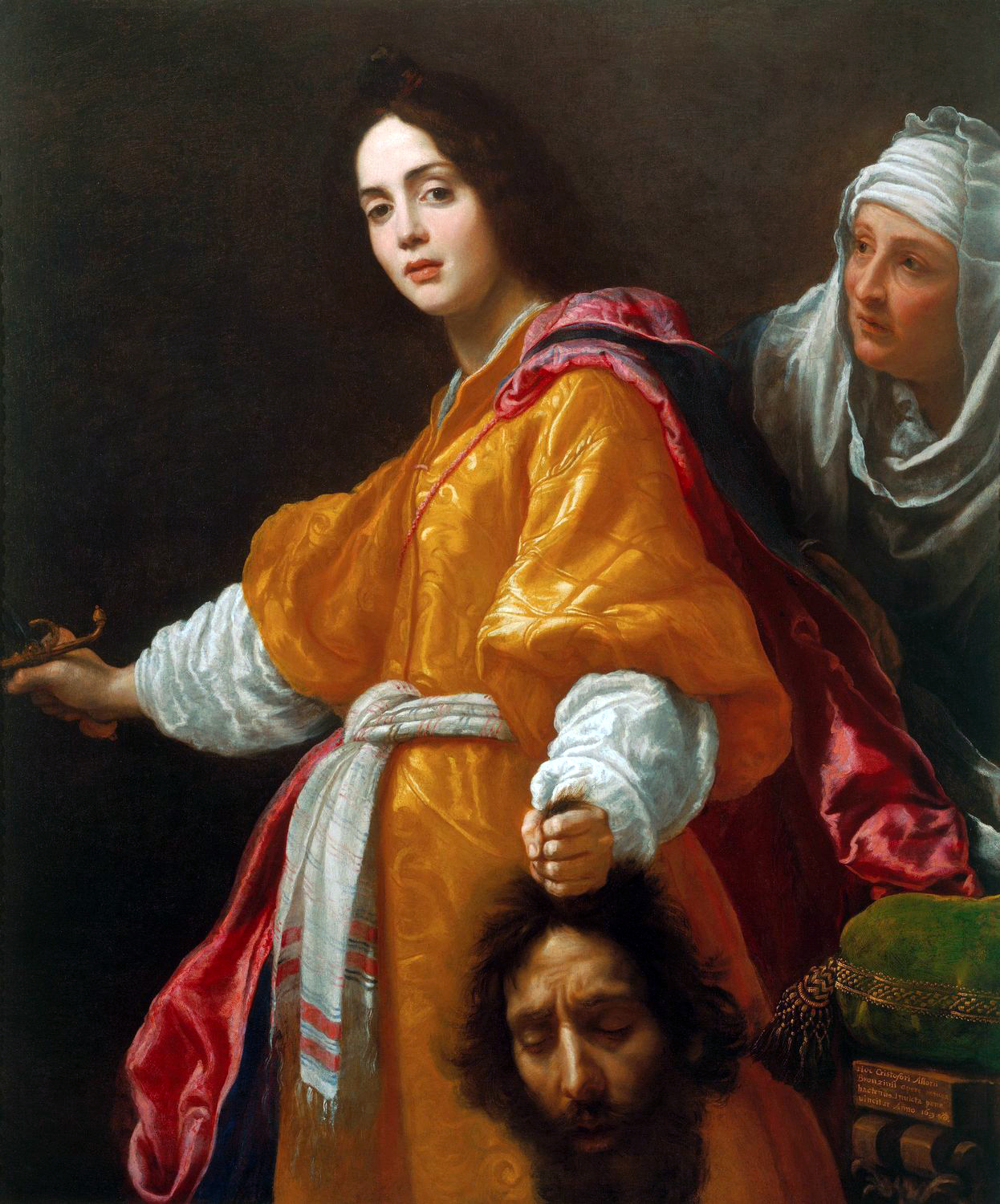
It's also been an interesting week in terms of the year too. Two feasts and a memorial in a row, with St Monica, St Augustine, and the Beheading of John the Baptist back to back. I don't know a lot about Monica, except she was Augustine's mum, but Augustine I know more of. The readings for vigils were from the Confessions and they were really gorgeous - from his investigations and meditations on the One Beauty. I have to confess I've never finished the Confessions - I did read quite a bit of them in patches when I was studying, and an awful lot of his theology, but I never did the Confessions from start to finish, although I did try. This makes me wonder whether it wasn't the right time for them then but it may be time for another go? And John the Baptist: I know it's the wrong image but I always think of Allori's Judith with the head of Holofernes when I think of this event. But also as forerunner, beginning, cousin, friend, torch, Elijah Mk 2... It was a bit of a relief to return to ordinary Ordinary Time today.

18 July 2013

General stuff

I just realised that it's months since I posted anything here. Lots of reasons but mostly because I haven't had anything to say particularly, although I blushed to realise I still had the Easter badge on my site when we're in Week 15 of Ordinary Time!

It is a warm sunny winter's day here in Rotorua: you may be thinking that it's odd I'm posting during the day on a Thursday when I should be working. Well, at present typing is pretty much the only way I can communicate as my voice has departed to parts unknown.... A tiny squeak is about as good as it gets right now. I am the grateful recipient of a nasty chest infection courtesy of friends at work. So kind! On the bright side, I get to sit in the sun in my lounge in Rotorua, instead of being holed up in my office at work, but on balance I would like to be well enough to be at work!

Lots has been going on, including me being invited to the Waiapu Diocesan Regional Conference in Tauranga a couple of weeks ago as a representative of our parish, and beginning to serve on the parish vestry (third time on vestry, first time in this parish). Hubby has started working halftime as a photography tutor, and small daughter has been doing extremely well in her swimming and trampolining - to the point that her coach has invited her into the competition training stream for trampolining. She's only 7 so that's quite an achievement at that age. School is also going very well for her.

On the personal front, I am very much enjoying a new translation of St Benedict's Rule included in The Benedictine Handbook that I got the other day. It's a much more modern translation than my previous one (which was Latin/English side by side, great for scholars but not much good for me!) and I love the way that it makes it fresh. Not that the Rule needs much freshening but it's good to have a new perspective on it. Also enjoying the meditations and prayers included in the Handbook: the Rule itself is really short (only72 short chapters) and more than two-thirds of the book is full of other resources.

We've also been enjoying the sunny Bay of Plenty. In contrast to the rest of the country, the weather is beautifully settled here: there's been some serious frosts (-3degC at work earlier this week!) but the days are lovely.

1 April 2013

Triduum

It's Easter Monday, the "extra" holiday that we get tacked onto the Triduum here in NZ. And I am grateful. One of my friends at work asked what I'd be getting up to for Easter and I answered truthfully that I'd be spending a lot of time at church....

A few thoughts from the Triduum:
  • Maundy Thursday: a silent meditative journey. Small daughter came with me as we both thought it was going to be the Last Supper and footwashing. She and I reflected and travelled through the journey laid out for us together, and got to wash each other's feet. Quite moving.
  • We covered all the holy pictures and statues at home, to help us all remember where we were in the journey at home too. Amazing how much that black cover draws your eye, keeping the loss and the pain in front of us for those few days.
  • Good Friday: the 3-hour vigil before the Cross, St Luke's used a forn of the stations of the cross to guide us through. I was struck by the phrase "the Lamb of God" - and got thinking about the time I was seconded to a meatworks. One thing I found out very quickly there: cows know what's coming but sheep don't. Sheep walk trustingly and fairly quietly up the ramp to the sticking station. Jesus knew, but he still walked trustingly. I spent a lot of time thinking about this one, alongside the suffering servant songs from Isaiah.
  • Easter Saturday: the waiting day. Always seems to be quite empty, sad, but like after a death, life has to go on for the rest of us with Saturday chores and normal Saturday activities.
  • We found that Maori TV was screening Jesus Christ Superstar on Saturday night and it was really interesting (once we got past the cringe-worthy 70s costuming and dance moves!!) - I can't remember ever seeing it from end to end and it proved quite a conversation point for hubby and me to reflect on some of the more human elements in the story.
  • Easter Sunday: Surrexit Christus, Alleluia! Joy and laughter flower again, Easter egg hunts before church in the morning, flowers and candles blazing on the altar again, no more black and purple but white and gold, and the blessing of old old friends of ours from Lower Hutt here in Rotorua - we didn't know they were coming and they didn't know we were there! They came home to our place for lunch and then we explored the Whakamaru Dam together in the afternoon. It's a fascinating place for a safety geek to look at!
The retreat that my prayer group had done at Tyburn Monastery last Saturday was a good way to enter into Holy Week, and helped me focus on where we were going, the day before the palms and hosannas.

We were tired today but it was a good kind of tired. We did a few things like taking small daughter to see the model railway exhibition, and daughter and I did the groceries to fill up our sadly denuded fridge and pantry (we loved seeing our friends yesterday but there was 9 of us here eating lunch - even with pooling our resources our fridge got pretty cleaned out!). I also did a spot of shopping for me: I am delighted to note that I have now lost so much weight that my old jeans simply fall off my hips, so I went to find some winterish trousers. Couldn't find any new jeans (yet) but did find a couple of pairs of other things I like so that was good. And noted with some glee that I have dropped four dress sizes!

We also spent some time playing family Wii games (we love Wii Sports Resort - frisbee golf, in particular!), and then daughter and I had a game of cribbage before dinner.

And tomorrow is back to the grindstone. At least my nose has had time to heal somewhat during this time!